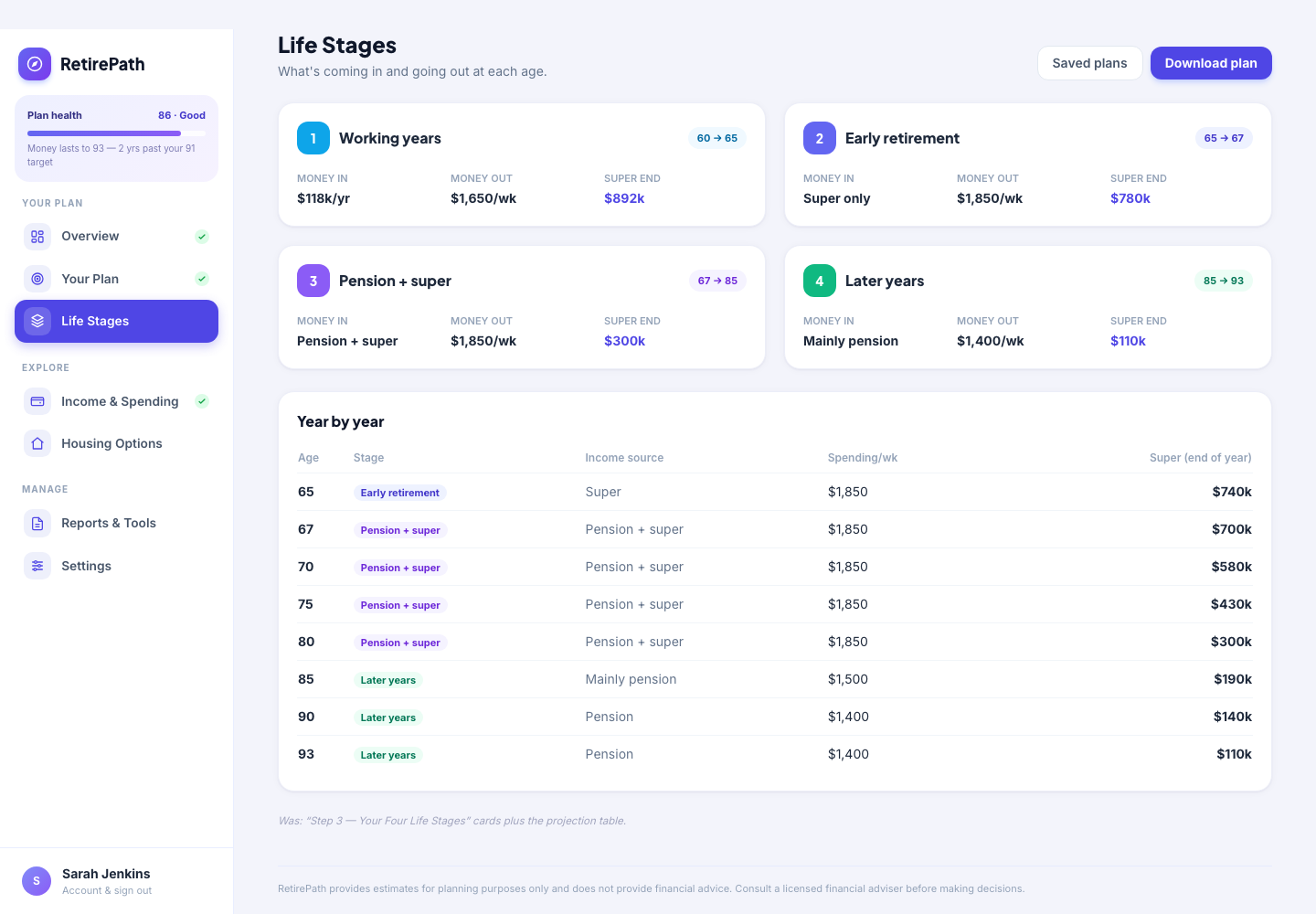
Most retirement maths assumes a flat weekly budget forever — which is how people end up too scared to spend in the years they can actually enjoy it. RetirePath models retirement in stages, so the plan matches the life.
The early transition — finishing work, maybe part-time first — is its own stage with its own income and spending, not blended into the average.
Travel, hobbies, helping the grandkids — the years where health and energy make money most useful. Give this stage the budget it deserves.
Spending naturally tapers. The model steps the budget down at the age you choose, so the plan isn't bloated for the later decades.
Later-life costs, care considerations and how long the money needs to last. Your goal age is a real input, not a default nobody checked.
Every stage produces a real table — income, drawdown and balance for each year — so nothing hides in an average.
Knowing the later years cost less is what lets the early years spend more — safely.
When "active" becomes "quiet" is your call — set the ages that match how you expect to live.
The years between finishing work and the Age Pension are where plans sink — the stage view makes that bridge explicit.
A dream trip, a car, a renovation — one-off spending can be modelled as its own event instead of inflating every year.
Planning to 90 vs 100 is a completely different budget — the tail is a number you choose, on purpose.
Set your stages and see what retirement really costs — free to try.
Start your free trialQuestions first? Talk to us